Is nothing sacred anymore?
I don't know if this Halo Braid device was actually announced during Venus Retrograde or if it just crossed my timeline during Venus retrograde, but it's a very retrograde expression of Venusian energy regardless. Which is not necessarily a bad thing, if you have Venus Retrograde natively in your birth chart, but in this case...let's talk about it.
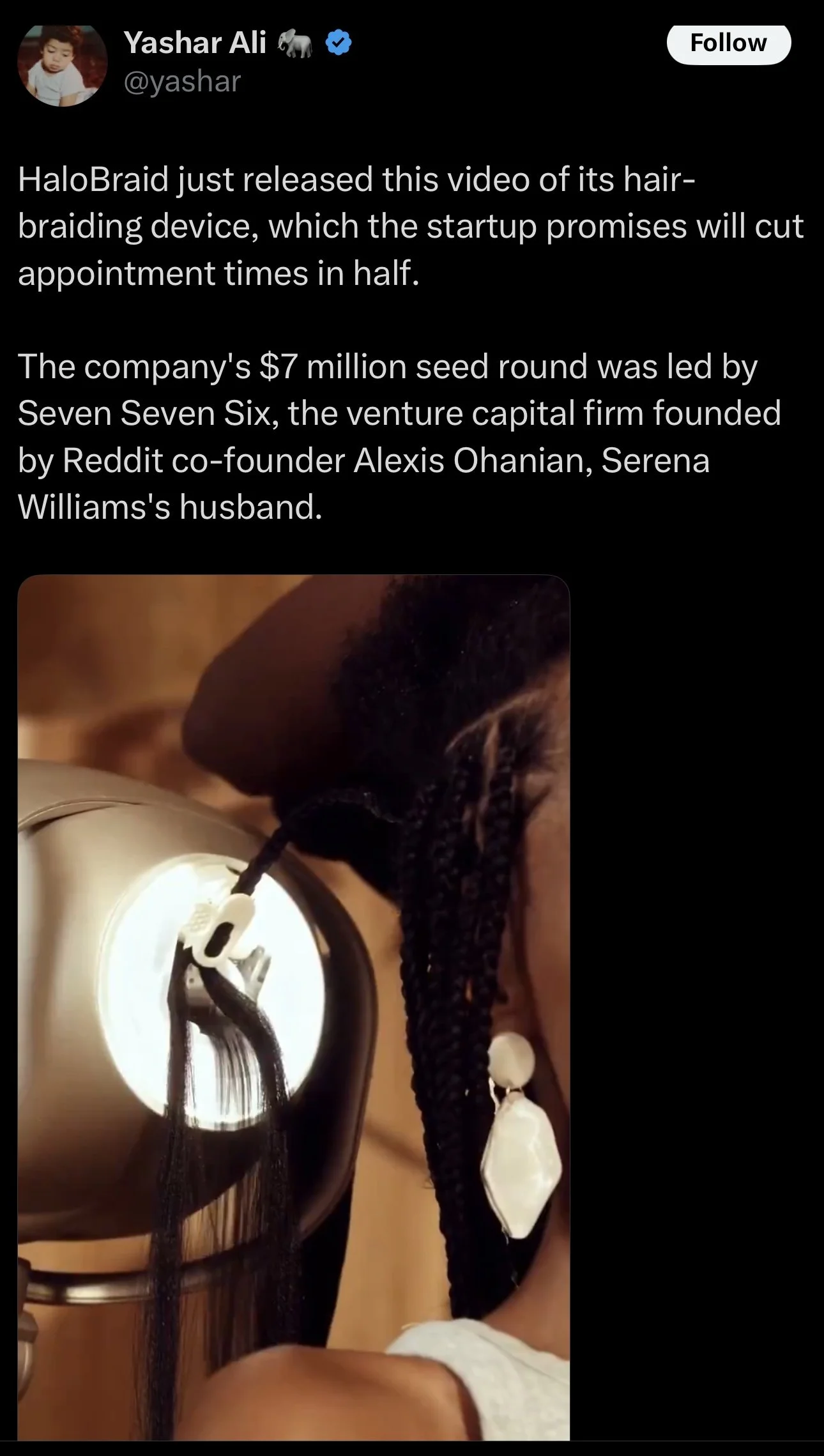
It's a very sleek ad with two Black women, and one of them starts a braid, then feeds the rest of it into this brand new Halo Braiding Machine. It has been backed by Serena Williams and her husband Alexis O'Hannion, and is promising to drastically cut appointment times for braiders.
Yes, it's giving Babylon Ting, but, you know, we want to be open-minded, so let's talk about it.
Venus is the planet of aesthetics and style and beauty, and while braiding may be very Plutonian, braids themselves are very Venusian.
Archetypal Venusian energy has a certain ease to it. And while this braid machine could potentially bring some much needed ease to the very real trials, tribulations, and inconveniences that are currently connected to the braiding process, Venus energy is also not easy. Or, it's not as easy as it looks.
And that's for a reason.
If you don't know, let me be the first to tell you that the 2nd House is a "work" house. The 2nd House is the original house of Taurus, which is ruled by Venus, and represents our first encounter with Venusian energy in the entire zodiac.
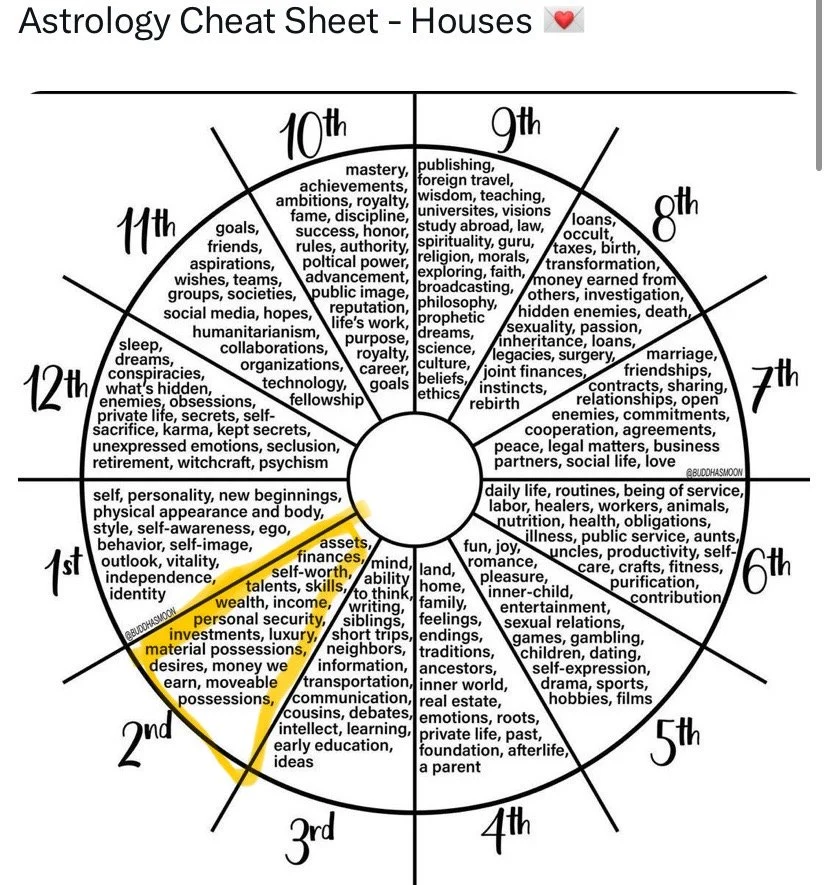
And as much as Taurus gets associated with comfort and luxury and beauty, where do you think it comes from? Taurus puts in work, friends!
And I interpret that to mean there's supposed to be some sort of deference and appreciation, not only for the art itself, but the process of creating art and beauty. The work that goes into it.
The experience of Venus is not just about admiring the final product that gets paraded on the surface, it's also about having some respect for the energy that goes into it. Like, creating beauty and art is supposed to take time and effort and thoughtfulness, and maybe even a little magical sleight of hand that can create an illusion. A touch of ethereality or a sense of connection to something higher!
It's almost as if the highest form of Venusian indulgence is about indulging in the process and the practice of cultivating beauty rather than just surface level consumption of the product or the beauty itself.
This HaloBraid machine is process-oriented, but it seems more about efficiency within the process than appreciation for the process. And you know what that sounds like? Virgo in Venus. Venus in its literal Fall. Venus in an energetic signature that it really doesn't do well in.
Shout out to the astrologer and content creator Avalldar or Av the Surgeon who has been doing the Lord's work of rehabilitating and restoring and bringing some dignity to Venus and Virgo lol.
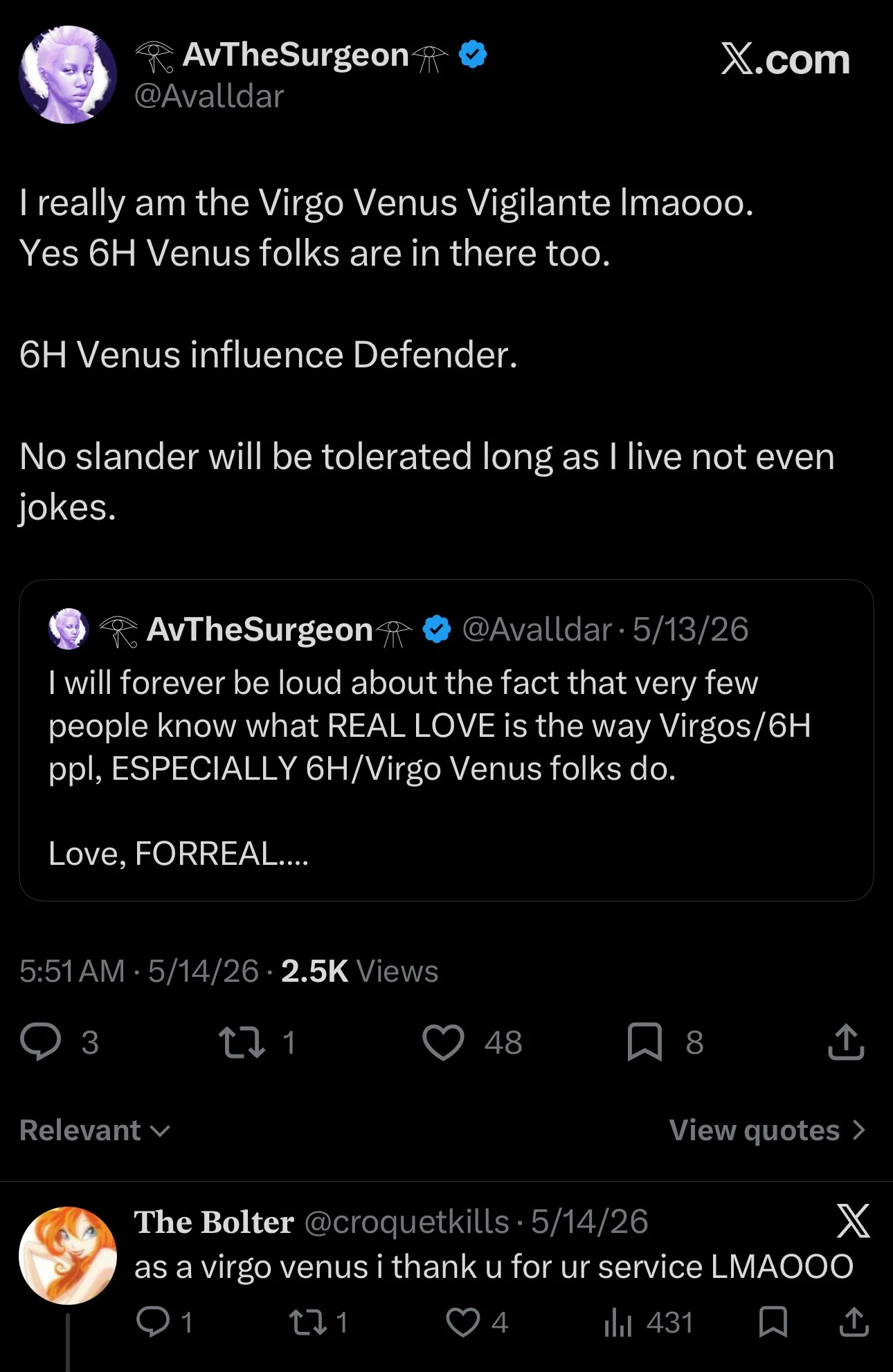
I really appreciate their perspective on Venus in its Fall, but at the end of the day, Virgo is not the most comfortable vibration for Venus. It can be a very severe Venus that's more concerned with production timetables and assembly lines and the mechanical aspect of a process. Just “getting it done” rather than the feeling of it or how indulging in a process can almost be like a spiritual devotion. The braid machine represents a Venus that's more so in service of industry than the individual or even something higher.
Consider the opposite of Venus and Virgo, which would be Venus and Pisces. Venus is exalted in the spiritual sign of Pisces.
It's funny because in my view, the lesson of Exalted Venus is hardly about aesthetic beauty and more so about the beauty of resonance and spiritual connection. A connection that can't be rigidly defined or whose value can't be reduced to commercial containers. It's transpersonal. On an individual level, that can be like, I just appreciate your existence and I'm glad we get to experience existence together. On a collective level, it can be like, I'm glad the culture gets to have this experience, and that this experience is available to enhance existence.
I know that feeling has already been deeply diluted by the modern braiding market, but there was a time, young people, before things got so distorted and ridiculous, when the beauty shop or any braiding space was a sacred place, particularly for Black women and girls. It's where you learned things from your aunties and big sisters and the older women in your community. Important things about existing as a woman in our communities, in society—a Black woman at that.
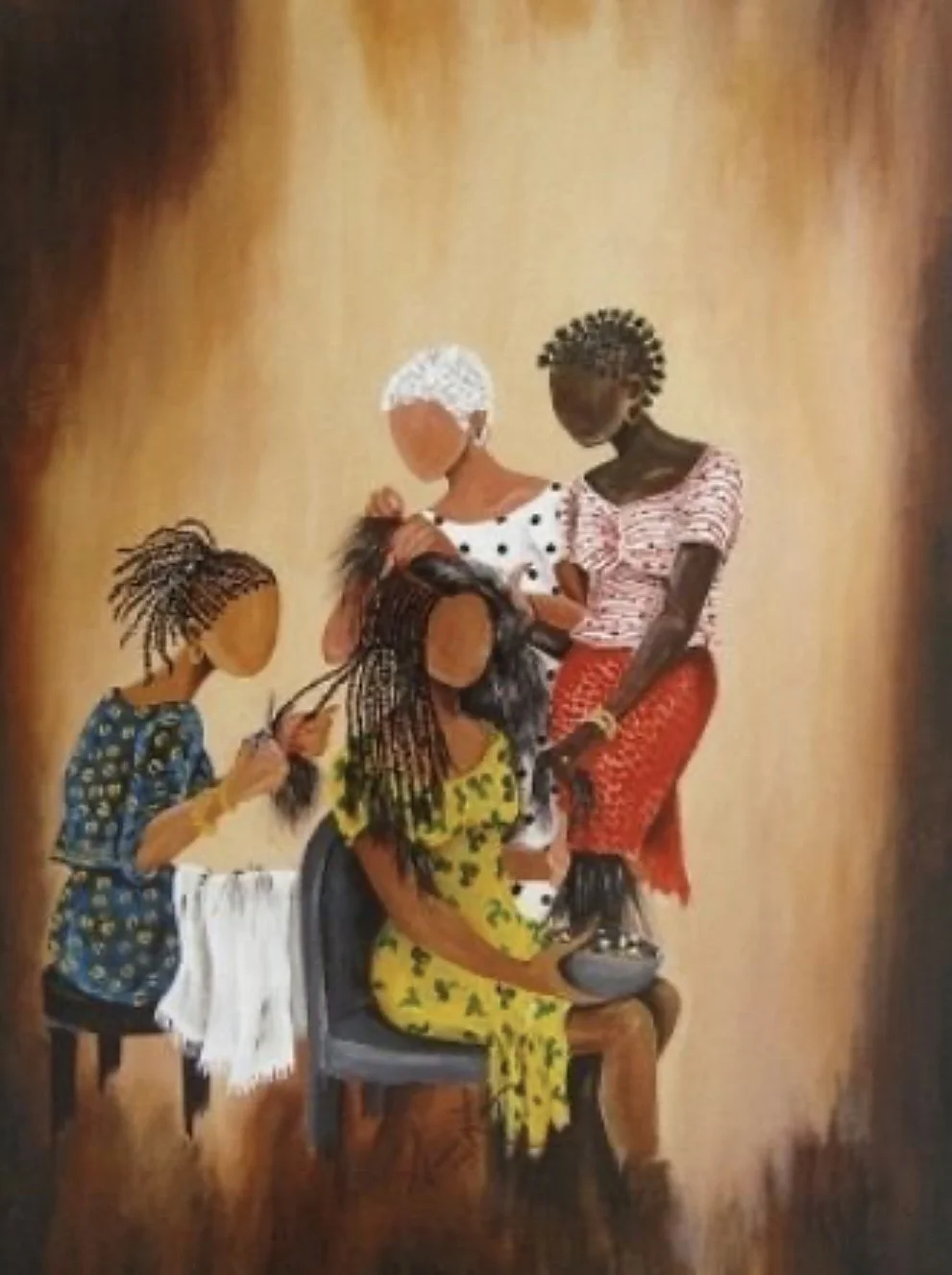
It was where you could be vulnerable and quite literally let your hair down—or let your hair out, or up, for that matter. It was where what was understood did not have to be explained when it came to our hair, which no one else anywhere could understand.
It would literally feel like we were spiritually bonded through not only the braids themselves, but by a shared understanding of the braiding process and the significance of why we even do it in the first place, and its importance on a practical level and on a cultural level. All of that was an a a shared experience. It was part of the process. It was the best part of the process.
I swear those old school beauty shops and braiding spaces could feel like places of both initiation and devotion, where you would set aside a significant amount of time and escape from the other daily duties of the world and give yourself over to this sacred personal, communal and cultural ritual.
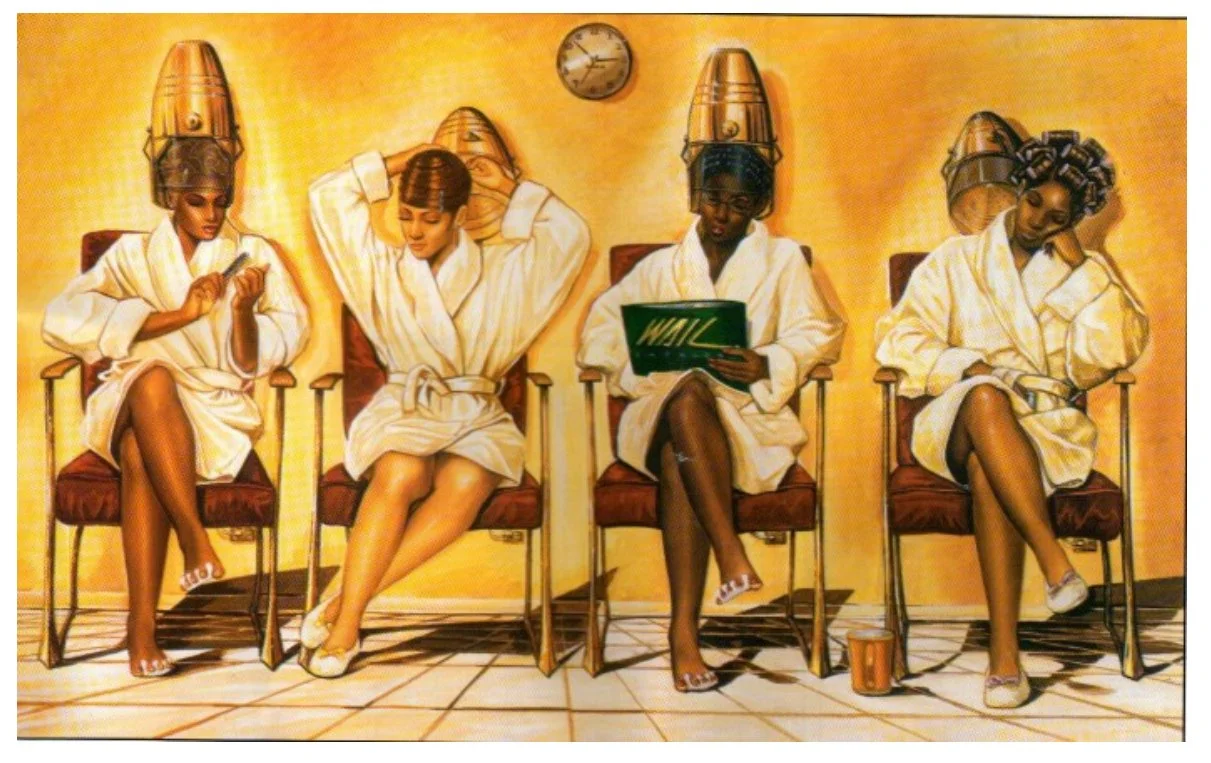
And not to mention the creativity that would emerge from our literal fingers! The art of it all!!
It actually reminds me of this example Dagara ancestor and philosopher Malodoma Somé gave in his book, "The Healing Wisdom of Africa" about the communal and spiritual aspect of creating art:
"When women get together to make pottery, they're acknowledging that their ability to create is a part of nature's design, a part of their purpose. Before a woman participates in the work with clay, which is the earth, she will first gather the signs and images she has seen in nature, and she will bring these signs into the circle of other women.
In the interest of producing something that is an extension of their wholeness, the women will begin by chanting and singing together, echoing one another. The work is not in the form of a production line, even though a production line would have yielded more than enough of these practical containers.Nor do the women work alone. Each person has clay. They are seated in a circle and they chant until they are in some sort of ecstatic place, and it is from that place that they begin molding the clay.
It is as if the knowledge of how to make pots is not in their brains, but in their collective energy. The product becomes an extension of the collective energy of the circle of women.The women understand that it is necessary to reach that place of wholeness before they can bring something out of it."
And I think that wisdom can be applied androgynously and non-binarily. Again, there are some very real trials and tribulations that come with braiding, and I'm not against improving things for the people who experience those challenges the most.
And, like I said, even though the current state of culture and the economy has already sullied that sacred experience significantly, I worry that a major shift to something like braid machines and a full-on focus on technological efficiency will just completely decimate it.
It's not an innovation that brings us closer to that personal and communal connection. It seems like it's an innovation that drives us even further from it. It puts the focus on the product rather than the process. Efficiency over essence.
And you know what? Maybe I'm being too precious. Maybe I'm a Luddite. Well, I am definitely a Luddite if we're going by the historical movement that that term comes from. I'm down with that.
Maybe this is exactly what stylists want, and I'm tripping. But that's just how I'm reading it right now. It is too early in Pluto and Aquarius to see how things shake out with all these disruptive new technologies and how they might impact humanity and society. Well, for some of these new technologies, a lot of them we do know and we we can see very clearly where this is going. But...you know...maybe this is great.
But I listen to my ancestors and my elders, and I will just close out with this quote from ancestor Malidoma Somé, also from his book, "The Healing Wisdom of Africa," about the indigenous philosophy on work and technology and innovation, and how it must be connected to a higher good, to something that transcends mere output and completion.
"What indigenous and Western peoples have in common is the desire to understand the intricacies and complexities of the world we live in, and to harness the power of nature for certain practical purposes,” he wrote.
“Where we have taken different routes, however, is the context within which we have developed our technologies and the purposes for which we have used them. In the West, technology is oriented toward industrial, commercial, and military uses. Among indigenous people, it serves to heal people. It serves to help people remember and fulfill their purpose in life."
Let me know what you think. Am I being an enemy of progress? Or do the ancestors have a point? Let me know.
Asé!
You can listen to the podcast version of this essay on Spotify or Apple Podcasts as “Jada Water”; book a reading here; or follow me at @jayduhwater on YouTube, Instagram, TikTok and Substack.