How NOT to be a Community Elder: A “The Fighting Temptations” Analysis
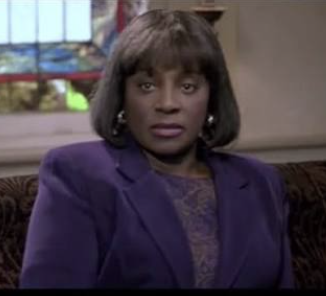
So I was watching “The Fighting Temptations” movie with Beyoncé and Cuba Gooding Jr.—and a ton of other amazing artist—and the character Sister Paulina, played by Latanya Richardson Jackson, was a perfect example of how NOT to be an elder within the context of community.
I think many of us here in the West, despite being born and raised in the West, have at least some idea or understanding of what it means to be an elder. Not just to be an old person, but to be an *elder*. I know we do because there's a whole subsection of black culture that created the term OG, and whether you're in that subsection or you're a got da*n gangster or not, we all know and understand it to be a badge of honor and a position of esteem. And that you don't just get it by being old.
At least not originally, child. These kids will call anyone a OG these days, and honestly, that's the gosh doggone problem. But yes, originally it was a term and position of respect reserved only for those in the community who carry the wisdom, experience, and comportment to have earned it.
But, like the term OG, within the broader culture we in the West have allowed “elder” and “old person” to get a little too interchangeable around here. Which is why I so love and appreciate Ancestor Malidoma Somé for drawing some distinct definitions and putting some structure around elderhood in his book, The Healing Wisdom of Africa.
Somé outlines and articulates some of the specific characteristics embodied by true community elders, the role and function they have in community, and how to execute them the way a true elder should. And hint: it is not by clacking your little kitten heels around, throwing bibles—or any kind of holy book for that matter—and bylaws in people's faces every chance you get.
Now, before we get into the case study in “The Fighting Temptations,” let's look a little closer at what Somé says, about what the broader indigenous Dagara culture understands about not only what it means to be an elder, but what it means to be a community—which does not and cannot exist without elders.
The Indigenous Purpose of Community
Indigenous Dagara culture is designed to constantly and continuously reinforce the understanding that every member of a community is born with a unique inner genius that develops into a gift that they are meant to share with their community and in return be supported by their community for its ongoing development.
And just to be clear, the genius that somebody describes in The Healing Wisdom of Africa. It is not to be confused with the Western definition of “genius” or the Western definition of a “gift,” as “a great intelligence or an exceptional talent.”
“I don't reject that definition,” Somé writes, “but it is different from the indigenous definition, which sees genius as an open line that flows through a person from the other world. It seems to me that limiting the meaning of genius to intelligence or talent displaces it from its real source [Spirit] and privatizes it in the individual.”
And it is the job of the elder to “bless that genius, thereby allowing it to serve efficiently the greater good.”
This is the case, especially, when that genius is emerging from and being offered by young people, and/or those who are experiencing arrested thwarted development in some way, due to their gifts and genius being shunned, suppressed, exploited, or overlooked in their youth when they were initially emergent.
Somé says that this inherent genius we all have, in some shape or fashion requires “emotional and even sacred support once it starts to surface.”
“The full blossoming of youth requires taking risks. It demands that one be safe enough to respond to the urge for growth,” he writes. “That safety comes from the hands of older generations.”
Now let's get on into the fighting temptations and feisty Miss Sister Paulina.
The Elder Blessing & The Elder Curse in “The Fighting Temptations”
The choir practice scene—with Eddie Levert of the OJs, Montel Jordan of “This Is How We Do It,” Lil Zane of my childhood bedroom posters (shout out to Word Up magazine), and a bunch of other artists and actors—is a great example of how an elder can be the hands that provide that safe container for them to develop within. And how an elder can very much drop the ball when them hands are weak as hell.
So, they're in the church basement singing some traditional gospel songs—”Down by the Riverside” in this case—when some of the younger and non-traditional members of the choir take the risk of at least seeming to subvert tradition by remixing what Lil Zane calls, “all that street corner barbershop harmony with some new hip hop,” spicing it up with what is essentially their own unique gifts and generational genius.
At first, Eddie Levert's character—another elder presence/archetype in the community in this movie—is taken aback by these youngsters doing their disruptive Aries youngster thing, exerting their own agency and influence over what’s going on and their established norms on their community's customs. He immediately kind of stiffens to it and appears a bit skeptical of what they're bringing to the table.
This is also something Somé talks about when he says the “lack of predictability and control that comes with the exuberant energy of youth is seen as a threat to the community, rather than an asset that will enhance them and the whole community as well.”
But then, LaVert's character quickly recognizes it for what it is—genius, gifts—and that not only does this knock, but this new and at first unrecognizable and unpredictable thing is not an inherent threat to tradition. Au contraire, it enhances and expands on it. It opens up what could potentially be a new path for bringing more members of the community into existing, some may say ancient community traditions, and giving them a way to feel seen and heard and appreciated and even served in a way that resonates with them and their generation.
And that's a good thing! It's breathing new life into an old tradition. Elder Lavert's openness and receptivity and active engagement with what the young people are bringing forth not only serves as an elder's blessing for their work, but allows it to efficiently serve the greater good.
Because, see, when they first started singing this spicy version of “Down by the Riverside,” their other choir mate, this white man, whose name I don't know or ever hear in the movie, is under the pressure of Levert the Elder's skepticism, and was feeling the need to hide and suppress how he felt about the song and the obvious feel-good energy it was bringing, so as to not offend the elder in the room.
People having to hide how they really feel and not be able to point out the obvious and not be able to live in their truth—that this song is banging, for example—is what kills community. It's a silent killer of community. But once this elderly presence gives his blessing, it's as if it gives others in the community a sense of permission to enjoy and appreciate it. And be served by it as well.
And then, Pastor Bunk. Not his actual name in real life or the movie, but we’ll call him Pastor Bunk. He’s another elder presence in “The Fighting Temptations,” and at choir practice comes through and provides the sort of official institutional sanction or institutional blessing—by not only being open and receptive to the vibe and jamming along, but by saying, “as long as they're praising God's name, it's all right with me.”
That is another hallmark of an actual good elder: they are able to meet people where they're at. “Not with the mind to tell that person what to do and what not to do,” Somé says, “but to share similar experiences and see in the story or testimony of the other his or her connection with it.”
And for a second, it's a beautiful scene. It is essentially him recognizing the authenticity and shared experience of what they're saying, regardless of whether he's familiar with the way it's being expressed or not. And not just reflexively being negative or lying to himself and everybody else about the fact that this sounds good. This song sounds good. This is a great remix. “Good job, young people!” Why you can't just say that?!
He also does another good elderly deed by talking about them presenting this new youth spin to the greater congregation on Sunday, making space and holding space within the community's anchoring institution for it to develop and blossom and be seen and appreciated.
But then here comes this lady, Sister Paulina, once again hollering about the bylaws, representing the kind of elder who, in the interest of maintaining the established order that she's gotten comfortable with—and that doesn't challenge or require her to grow and learn and experience the friction that comes with growing and learning—is hostile to what is emergent, trying to suffocate and sabotage its growth.
And that's just me analyzing it on a human level. At the end of the day, resistance to change is a very human thing. And therefore, I can understand and be sympathetic toward her. Change is hard and can take time. And as an elder-in-training, I have to hold space for that. But baby, I'm not an elder yet. And what I can't hold space for is people who take it beyond the change is scary thing, which is again human and understandable, and want to hold on to traditions because they want to view a potential change to the established structure and order of things—the status quo—as a threat to their position and their power and their status and authority. Their ego.
Which is whack and lame and never ends well. Because don't think that just because you, an elder, effectively shut down or kept some genius from emerging in your community that it's not going to find another way to emerge. It's going to come out regardless, but it's going come out in a way that puts them and everybody at risk because it'll be forced to come out without you. Without the guidance and structure and safety and loving, encouraging support that our elders are supposed to provide.
It'll force those young people to do it alone. Or, more truthfully, with and underneath the guidance of an alternative authoritative structure that may or not have their best interest at heart. You're leaving them and their highly valuable gifts vulnerable to potentially harmful, toxic, exploitative interests. Instead of being invited out and nurtured by some OGs who at least love them, even if they don't all the way understand them, you're basically ushering them and their raw genius and gifts out of your community and into what effectively becomes a “shadow” community and into the hands of some suspect OGs.
And baby, that is you signing the death warrant for your own community and a slow death warrant at that. Because you, Sister Paulina, and the sister Paulinas of the world, may not feel the effects and impacts of your actions, but your descendants will down the line. You can guarantee that.
“In the absence of elders,” Somé says, “the container of cultural wholeness breaks and social chaos arises.”
And that is why we need good elders, open-minded elders, supportive elders. Adaptable, flexible elders. And we can't be out here calling everyone an OG and calling every old person an elder. That is a sacred and critical role in the continuation of a healthy community. And we cannot have these ego-centered old people jeopardizing that just because they're old. We can't give that kind of elder authority to every old person walking around here.
And I'm sorry, but I am not sorry. The role is too critical within community for all that. So bye, sister Paulinas. Okay?! We're going on without you. And it's because you left yourself there.
Asé!